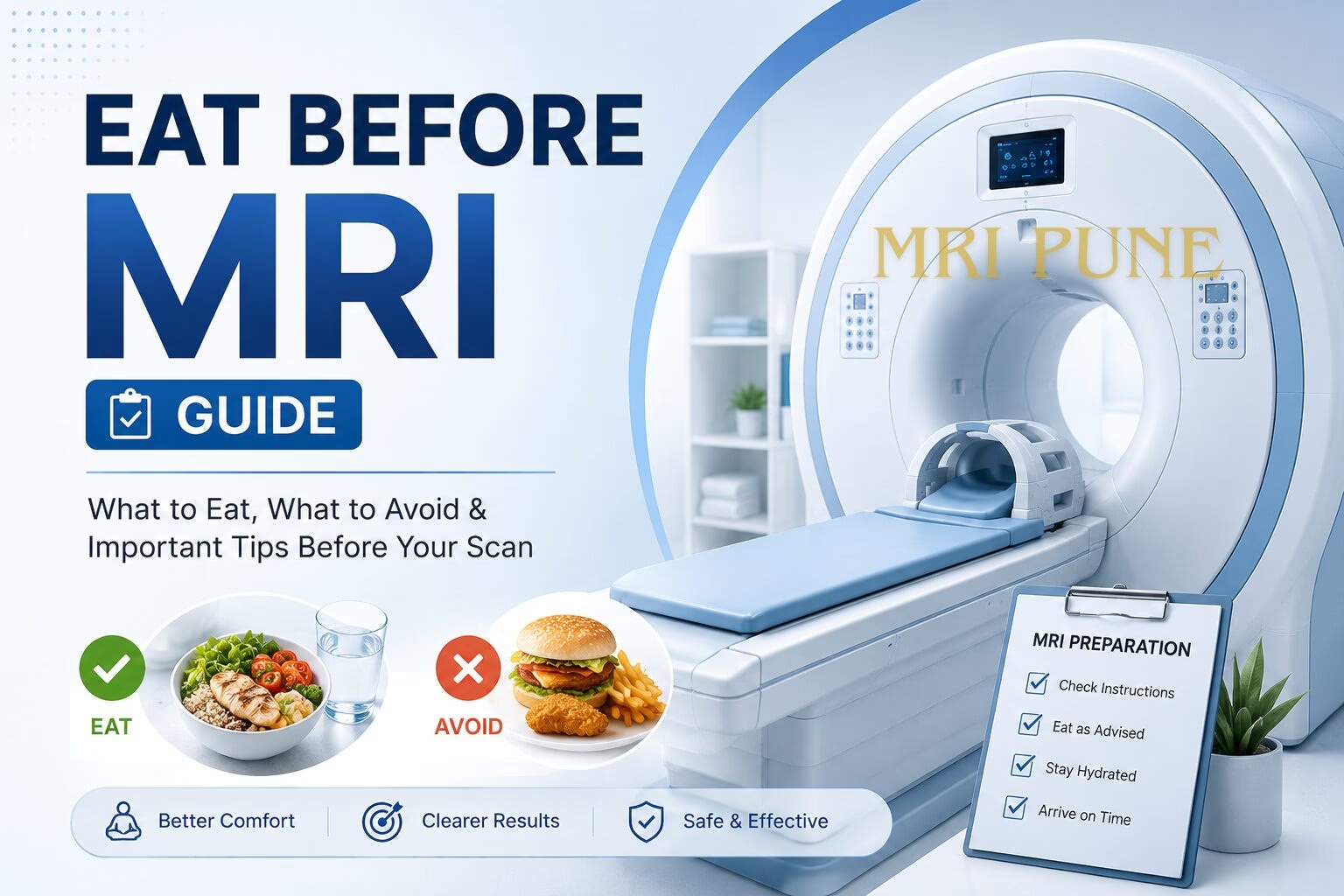
Can You Eat Before an MRI Scan? A Practical Guide for Patients in Pune
Somewhere between reading your prescription and reaching the diagnostic center, almost every patient asks the same question: “Wait, can I eat before this or not?” And then, because most guides online are written for a Western audience, the answer they find is some version of “avoid heavy, fatty foods” — which doesn’t really help when your actual breakfast question is “is poha okay?”
Let’s answer this properly, the way it actually applies to your morning.
The Quick Answer
For most MRI scans — brain, spine, knee, shoulder, and other joint scans — you can eat and drink completely normally. Fasting is only needed for a specific handful of situations, mainly scans of the abdomen or pelvis, some scans using contrast dye, and cases where sedation is involved.
If your prescription doesn’t mention the abdomen, pelvis, or contrast, there’s a good chance you don’t need to change your breakfast plans at all. But the center performing your scan will always confirm this specifically — never assume based on this article alone.
Quick Lookup: Can You Eat Before Your Specific Scan?
| Type of MRI | Can You Eat Normally? |
|---|---|
| Brain MRI | Yes, eat normally |
| Spine MRI | Yes, eat normally |
| Knee / Shoulder / Joint MRI | Yes, eat normally |
| Abdomen or Pelvis MRI | Usually fasting required — confirm timing with your center |
| MRI with Contrast Dye | Often a short fasting window — confirm with your center |
| MRCP (bile duct/gallbladder scan) | Fasting required |
| Cardiac MRI | Fasting and no caffeine — confirm exact hours with your center |
This table covers the general pattern, but your specific instructions always come from the center performing your scan — some centers have slightly different protocols even for the same scan type, so a quick confirmation call is always worth it.
What About an Indian Breakfast — Is Poha or Idli Okay?
This is genuinely the question we get asked the most, and it’s the one almost no guide actually answers.
If your scan doesn’t require fasting (see the table above), a normal Indian breakfast — poha, idli-sambar, upma, paratha, tea or coffee — is perfectly fine. There’s no special restriction that applies specifically to Indian food. The “avoid heavy, fatty meals” advice you’ll see elsewhere is really just common sense: a very oily, heavy meal right before lying still for 30-45 minutes can make anyone a bit uncomfortable, whether that meal is paratha or a burger. A normal breakfast at a normal time is not a problem.
If your scan does require fasting — say, an abdomen MRI — that applies the same way it would to any meal. It’s not about avoiding “Indian” food specifically; it’s about having an empty stomach, full stop, whatever the cuisine.
Why Fasting Actually Matters (When It Does)
For abdominal and pelvic scans, food and gas in your digestive system genuinely get in the way of the images. Your intestines are constantly moving — a process called peristalsis — and that movement during a scan can blur the very organs your doctor needs to see clearly. An empty stomach simply holds still better.
For scans involving contrast dye, the concern is different: some patients feel mild nausea after the injection, and lying flat on a full stomach makes that more uncomfortable than it needs to be. Fasting beforehand is a comfort and safety measure, not a strict rule about the scan itself.
If You’re Diabetic — This Section Is For You
Fasting instructions written for the general public often forget that “just don’t eat for a few hours” is a very different instruction if you’re managing diabetes.
If you take insulin or medication that needs to be timed with meals, don’t just follow generic fasting advice — call your imaging centre and mention you’re diabetic when you book. Most centres can adjust your appointment to an early morning slot specifically so your fasting window is shorter, and your doctor may also adjust your medication timing for that day. This is genuinely one thing worth a phone call rather than guessing, since going too long without food when you’re on certain medications can be a real problem, not just an inconvenience.
What If You Have Children Booked for a Scan?
Kids and fasting don’t mix well, and pretending otherwise doesn’t help anyone. If your child’s MRI needs sedation (common for younger children who can’t stay still for the scan duration), the centre will give you specific timing for their last meal — usually shorter fasting windows than adults, adjusted for the child’s age and weight.
A practical tip that actually helps: book the earliest possible slot for a fasting scan involving a child. A 7am appointment with a light dinner the night before is a much easier fast for a child to manage than a 2pm appointment after a full day of hunger.
“I Accidentally Ate — What Happens Now?”
This happens more often than you’d think, and it’s rarely a disaster.
If you were told to fast and ate something before realising it, call the centre before you arrive, not after. In many cases, especially for non-contrast scans, they can simply adjust your appointment time later in the day once enough time has passed. For contrast scans, they may ask you to reschedule to be safe. Either way, showing up and mentioning it honestly at the reception is far better than staying quiet and hoping it doesn’t matter — the technologist would rather adjust your slot than get an unclear scan that needs to be repeated anyway.
Vrat, Ekadashi & Scan-Day Fasting — Does It Overlap?
If your scan happens to fall on a day you’re already observing a religious fast, you might wonder if that counts. It doesn’t automatically — a vrat fast and a medical fasting requirement aren’t the same thing, and one doesn’t substitute for the other. If your scan requires a specific fasting window (say, water is allowed but your vrat doesn’t permit even that), mention both to the centre staff when you book — they can usually guide you on how to manage both without compromising either your scan quality or your personal observance.
What to Eat After Your Scan
If you were fasting before your scan, there’s no need to rush into a heavy meal right after. A light, easy meal — khichdi, toast, fruit, or a simple home-cooked meal — is a gentler way to break the fast than jumping straight into something oily or spicy. If you received contrast dye, drinking a bit of extra water over the next few hours helps your body process it, though this isn’t usually a strict requirement for most patients.
Frequently Asked Questions
Can I drink tea or coffee before an MRI? For most non-fasting scans, yes. For cardiac MRI specifically, caffeine is usually restricted — your centre will confirm the exact hours.
Do I need to fast before a knee or spine MRI? No, these are among the scans that typically don’t require any fasting at all.
What if I’m not sure whether my scan needs fasting? Call the centre before your appointment and ask directly, mentioning the exact scan written on your prescription. It’s a two-minute call that avoids any confusion on the day.
Can I take my regular medications before a fasting scan? In most cases yes, with a small sip of water, but this depends on the specific medication — always confirm with your doctor or the imaging center rather than assuming.
How long before the scan should I stop eating, if fasting is required? This varies by scan type and center, typically a few hours — your center will give you the exact timing when you book, since it can differ slightly between facilities.
Not sure if your specific scan needs fasting? Send us your prescription on WhatsApp and we’ll confirm exactly what to do before you book — no guesswork, no wasted trips.
For enquiry visit our site mripune.in
for know more about food and scan read the article by imagine world.